Easy Vegan Bibimbap Recipe – Delicious Plant-Based Meal
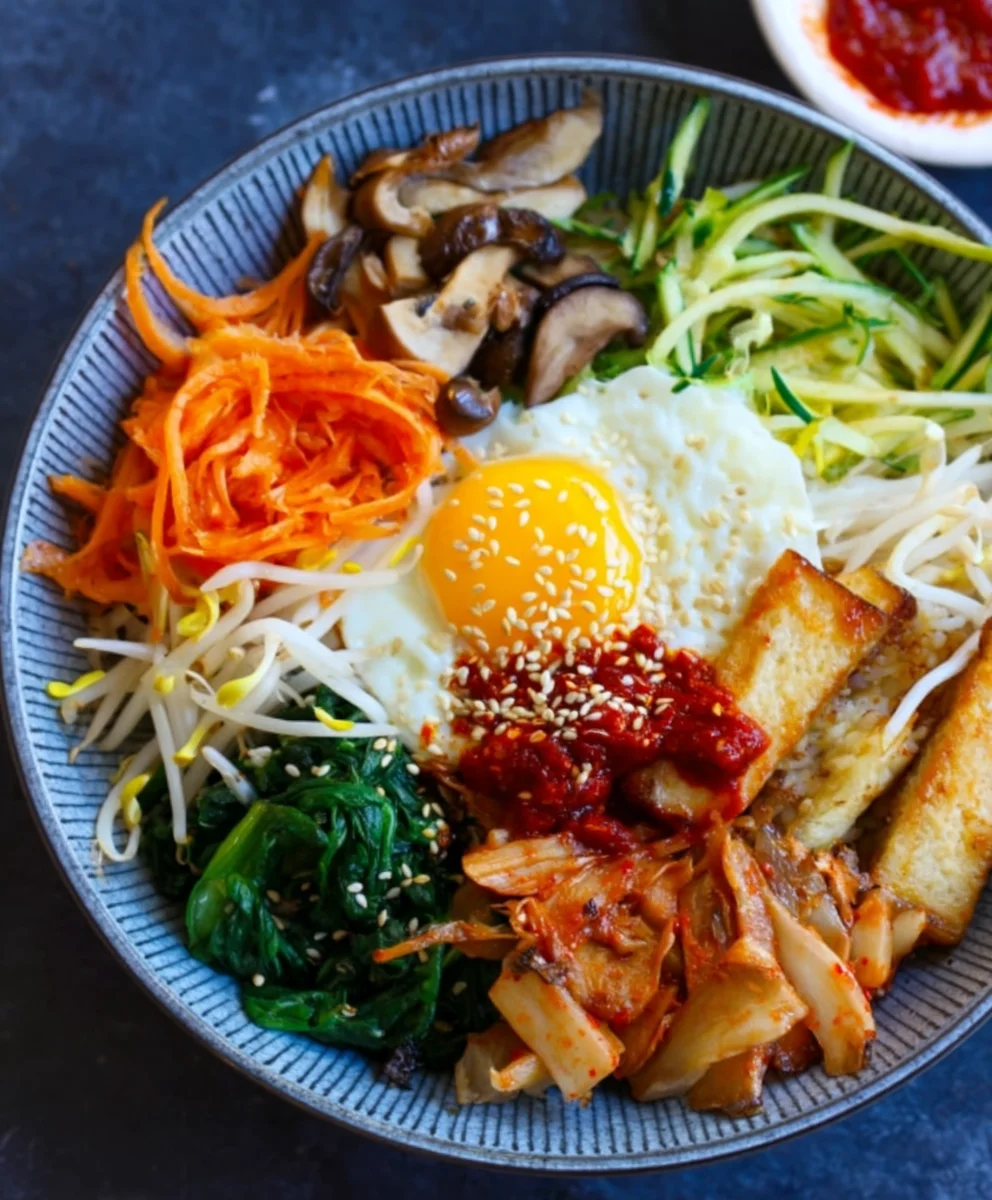
Vegan Bibimbap is a vibrant and deeply satisfying Korean classic that brings together a knon-alcoholic aleidoscope of textures and flavors in one beautiful bowl. Imagin extracte a bed of fluffy rice, crowned with an artful arrangement of colorful, seasoned vegetables, a protein source, and a luscious drizzle of spicy-sweet gochujang sauce. It’s no wonder this dish has captured hearts and taste buds worldwide. What makes Vegan Bibimbap so special is its incredible versatility; you can customize it with your favorite seasonal produce and protein. The magic lies in the individual preparation of each component, ensuring every bite offers a unique and delightful experience. Whether you’re a seasoned vegan chef or new to plant-based eating, this recipe will guide you through creating a show-stopping and nourishing Vegan Bibimbap that’s as visually stunning as it is delicious.
Ingredients:
- 1 large cucumber
- 200 grams fresh spinach
- 100 grams bean sprouts
- 1 medium carrot
- 200 grams firm tofu
- 100 grams mushrooms (enoki mushrooms recommended, but shiitake or oyster mushrooms work well too)
- Salt to taste
- Sesame oil (for seasoning vegetables and tofu)
- Minced garlic (for seasoning vegetables and tofu)
- 2 tablespoons gochujang (Korean chili paste)
- 1 tablespoon rice vinegar
- 1 tablespoon agave nectar or maple syrup (for sweetness)
- 1 tablespoon soy sauce (for umami and saltiness)
- 2 cloves garlic, minced (for the gochujang sauce)
- 2 teaspoons sesame oil (for the gochujang sauce)
Preparing Your Vegetables
Cucumber Julienne
Begin extract by preparing the refreshing cucumber component of your Vegan Bibimbap. Wash the cucumber thoroughly. For the best texture and aesthetic, I like to cut it into thin matchsticks, also known as julienning. You can achieve this by first slicing the cucumber lengthwise into thin planks, then stacking a few planks and cutting them into fine strips. For an extra touch, you can lightly salt the cucumber strips and let them sit in a colander for about 10 minutes. This helps to draw out some excess moisture, making them crisper and preventing them from making your rice soggy. After the resting period, gently pat the cucumber dry with a paper towel. Transfer the julienned cucumber to a small bowl and toss with a teaspoon of sesame oil and about half a teaspoon of minced garlic. Season with a pinch of salt if needed. The garlic and sesame oil infuse a subtle, aromatic flavor into the cucumber, making it a delightful fresh element.
Spinach Sauté
Next, we’ll tackle the vibrant spinach. Rinse the spinach well under cool water and ensure all dirt is removed. You can either blanch the spinach briefly in boiling water for about 30 seconds until just wilted, then shock it in ice water to stop the cooking and preserve its bright green color, or sauté it directly. For sautéing, heat about a teaspoon of sesame oil in a non-stick pan over medium heat. Add the rinsed spinach (it will seem like a lot, but it wilts down significantly). Stir-fry the spinach until it’s just wilted and tender, which should only take a couple of minutes. Remove from heat and place in a bowl. Season with a pinch of salt, another teaspoon of minced garlic, and a drizzle of sesame oil. Toss gently to combine. The garlic and sesame oil enhance the natural sweetness of the spinach, creating a wonderfully savory side.
Bean Sprout Blanch
Bean sprouts offer a lovely crunch and a subtle sweetness. Rinse the bean sprouts thoroughly under cold running water. Bring a small pot of water to a rolling boil. Carefully add the bean sprouts to the boiling water and cook for just 1-2 minutes. You want them to be tender-crisp, not mushy. Drain them immediately and rinse under cold water to stop the cooking process. Place the blanched bean sprouts in a clean bowl. Season them with a pinch of salt, a little bit of minced garlic (about half a teaspoon), and a teaspoon of sesame oil. Toss gently. This simple seasoning brings out their fresh flavor and adds a delightful texture to your Bibimbap.
Carrot Julienne
For a pop of color and a touch of sweetness, we’ll prepare the carrot. Peel the carrot and then julienne it, similar to how you prepared the cucumber. Aim for thin, uniform matchsticks. Heat a teaspoon of sesame oil in the same pan you used for the spinach over medium heat. Add the julienned carrots and sauté for 3-5 minutes, or until they are tender-crisp. You don’t want them to be too soft; a slight bite is ideal. Season the carrots with a pinch of salt. The sautéing process softens the carrot slightly and concentrates its natural sweetness, making it a delicious addition.
Preparing Your Tofu and Mushrooms
Crispy Tofu Cubes
Firm tofu is an excellent protein source for our Vegan Bibimbap. Press the tofu to remove as much excess water as possible. You can do this by wrapping it in paper towels and placing something heavy on top for at least 15-20 minutes, or using a tofu press. Once pressed, cut the tofu into bite-sized cubes. In a small bowl, toss the tofu cubes with a tablespoon of soy sauce, a teaspoon of minced garlic, and a teaspoon of sesame oil. You can then pan-fry these marinated tofu cubes in a lightly oiled pan over medium-high heat until they are golden brown and slightly crispy on all sides. Alternatively, you can bake them on a parchment-lined baking sheet at 400°F (200°C) for about 20-25 minutes, flipping halfway through, until they are golden and firm. The goal is to give them a pleasant chew and a slightly browned exterior.
Sautéed Mushrooms
Mushrooms add a wonderful umami depth and a meaty texture. If you’re using enoki mushrooms, trim off the root end and separate the strands. If using shiitake or oyster mushrooms, slice them thinly. Heat a teaspoon of sesame oil in a pan over medium-high heat. Add the mushrooms and sauté until they are tender and have released their moisture, which usually takes about 5-7 minutes depending on the type of mushroom. Season them with a pinch of salt and a touch of minced garlic towards the end of cooking. Their earthy flavor pairs beautifully with the other components.
The Gochujang Sauce
This sauce is the heart of the Bibimbap, providing its signature spicy, sweet, and savory kick. In a small bowl, combine the 2 tablespoons of gochujang, 1 tablespoon of rice vinegar, 1 tablespoon of agave nectar or maple syrup, 1 tablespoon of soy sauce, and 2 minced cloves of garlic. Add the 2 teaspoons of sesame oil. Whisk all the ingredients together until smooth and well combined. Taste the sauce and adjust the sweetness, saltiness, or vinegariness to your preference. You can add a tiny splash more soy sauce for saltiness, more agave for sweetness, or a bit more rice vinegar for tang. This sauce is potent and delicious, so a little goes a long way in dressing your bowl.
Assembly
Building Your Bibimbap Bowl
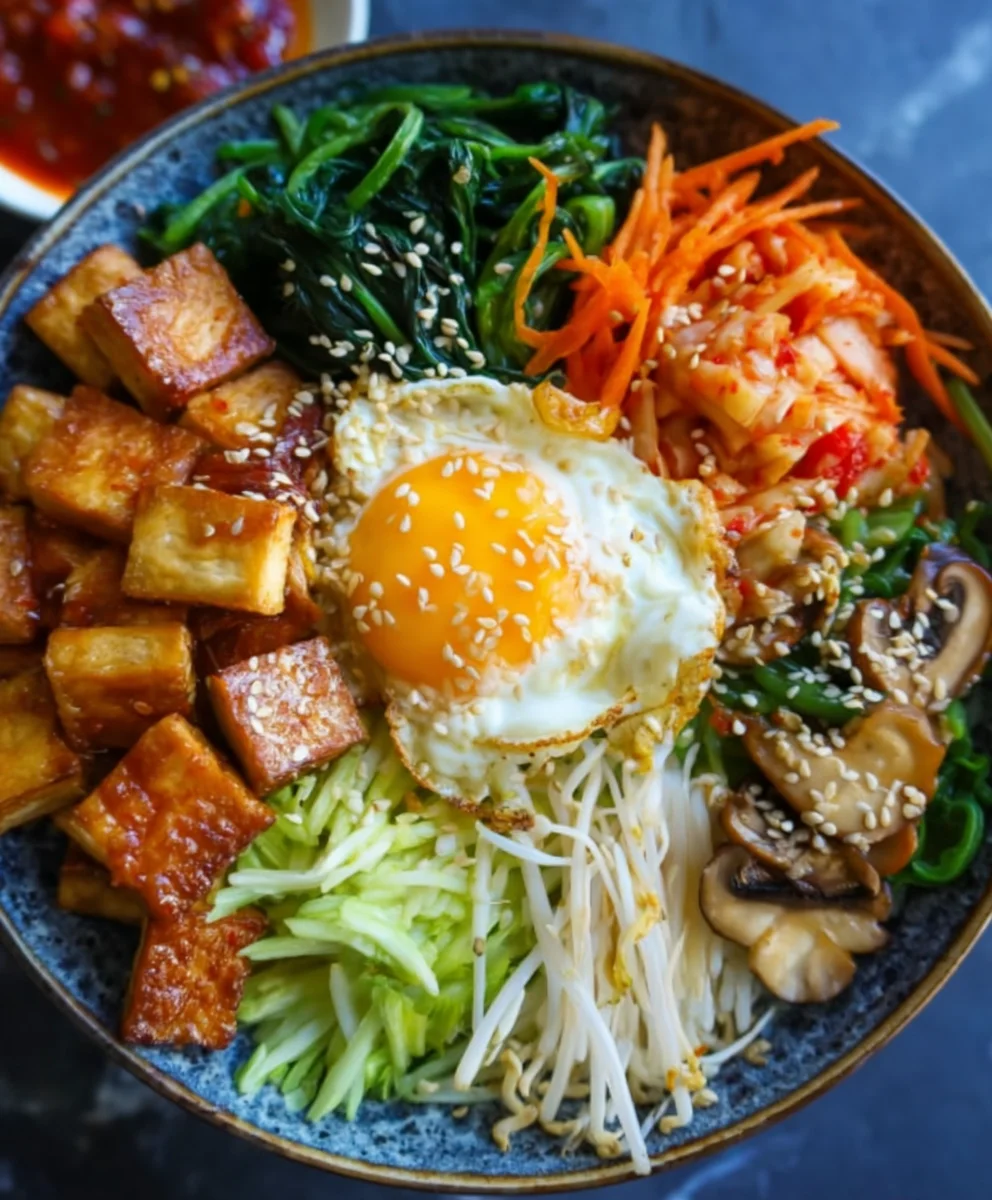
Now for the most enjoyable part: assembling your Vegan Bibimbap! Start with a generous base of steamed rice (short-grain white or brown rice works wonderfully) in a large bowl. Artfully arrange your prepared components around the rice in separate sections. Place the julienned cucumber, sautéed spinach, blanched bean sprouts, julienned carrots, crispy tofu cubes, and sautéed mushrooms in visually appealing piles. The idea is to have distinct colors and textures visible. This colorful arrangement is a hallmark of Bibimbap.
Adding the Finishing Touches
Once all your beautiful vegetable and tofu toppings are in place, it’s time to add the finishing touches. Create a small well in the center of the toppings. Dollop a generous tablespoon or two of your prepared gochujang sauce into this well. You can also add an optional fried egg in the center if you’re not strictly vegan, or a sprinkle of toasted sesame seeds and a drizzle of extra sesame oil over everything for added flavor and aroma.
Mixing and Enjoying
The final and crucial step is to mix everything together! Grab a spoon and fork (or chopsticks) and thoroughly combine all the ingredients in your bowl. Break up the rice and mix it with the vibrant vegetables, tofu, and the spicy gochujang sauce. The goal is to ensure every bite is a harmonious blend of flavors and textures. Enjoy your delicious, homemade Vegan Bibimbap immediately!
Conclusion:
And there you have it – your very own delicious and satisfying Vegan Bibimbap! This dish is a true testament to how vibrant and flavorful plant-based eating can be. We’ve walked through creating a balanced and beautiful bowl, from the perfectly cooked rice to the array of colorful vegetables and the essential savory sauce. The beauty of Vegan Bibimbap lies in its versatility; it’s not just a recipe, but a template for a nourishing and delightful meal. I encourage you to embrace the spirit of creativity and make this dish your own. Serve it family-style for a communal dining experience or prepare individual bowls for a wholesome lunch. Enjoy every colorful bite!
FAQs
Can I make Vegan Bibimbap ahead of time?
Yes, you absolutely can! You can chop and pre-cook most of the vegetables a day in advance and store them separately in airtight containers in the refrigerator. The sauce can also be made ahead. On the day of serving, simply reheat the vegetables gently and assemble your bowls. It’s a fantastic option for meal prepping.
What if I don’t have all the suggested vegetables?
Don’t worry at all! The beauty of Vegan Bibimbap is its adaptability. Feel free to substitute with any vegetables you have on hand or prefer. Zucchini, bell peppers of any color, snow peas, or even some pre-cooked edamame would all be wonderful additions. Aim for a variety of colors and textures for the best visual and taste experience.
Easy Vegan Bibimbap Recipe – Delicious Plant-Based Meal
A vibrant and flavorful plant-based Bibimbap with crispy tofu, fresh vegetables, and a zesty gochujang sauce.
Ingredients
-
1 large cucumber
-
200 grams fresh spinach
-
100 grams bean sprouts
-
1 medium carrot
-
200 grams firm tofu
-
100 grams mushrooms (enoki mushrooms recommended)
-
Salt to taste
-
Sesame oil
-
Minced garlic
-
2 tablespoons gochujang
-
1 tablespoon rice vinegar
-
1 tablespoon agave nectar or maple syrup
-
1 tablespoon soy sauce
-
2 cloves garlic, minced
-
2 teaspoons sesame oil
Instructions
-
Step 1
Prepare the vegetables: julienne the cucumber and carrot, sauté spinach, and blanch bean sprouts. Season each with salt, sesame oil, and minced garlic. -
Step 2
Prepare the crispy tofu: press and cube firm tofu, marinate with soy sauce, minced garlic, and sesame oil. Pan-fry or bake until golden brown and slightly crispy. -
Step 3
Sauté the mushrooms until tender and season with salt and minced garlic. -
Step 4
Make the gochujang sauce: combine gochujang, rice vinegar, agave nectar or maple syrup, soy sauce, minced garlic, and sesame oil. Whisk until smooth. -
Step 5
Assemble the bibimbap: start with a base of steamed rice in a bowl. Artfully arrange the prepared vegetables, tofu, and mushrooms around the rice. -
Step 6
Add a dollop of gochujang sauce to the center of the toppings. Optionally, add a fried egg (if not strictly vegan), toasted sesame seeds, and a drizzle of sesame oil. -
Step 7
Mix all ingredients thoroughly before enjoying.
Important Information
Nutrition Facts (Per Serving)
It is important to consider this information as approximate and not to use it as definitive health advice.
Allergy Information
Please check ingredients for potential allergens and consult a health professional if in doubt.